
Your flight lands. Your luggage arrives. Your stomach is already asking questions. Then comes the least glamorous part of international travel: paying for things.
There’s the exchange rate. The card fee. The merchant terminal that suddenly decides it has never heard of your bank. And, naturally, the moment when you stare at the receipt wondering whether that sandwich really cost that much.
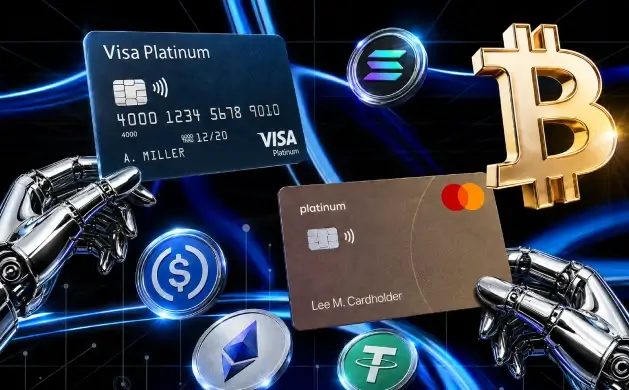
A crypto debit card introduces a different way to handle the problem. Instead of converting cryptocurrency into traditional currency before every purchase, users may be able to spend from their digital-asset balance through a card connected to a conventional payment network. That sounds simple. The mechanics, naturally, are a little more interesting.
The Card Looks Ordinary. The Money Doesn't.
Here is where things get interesting. A crypto debit card can connect digital assets with everyday payments. Depending on the product, cryptocurrency may be converted into a supported fiat currency when a purchase takes place, allowing the merchant to receive payment through an established card network.
The merchant may see a familiar card transaction. Behind the scenes, however, something rather different is happening.
For someone who already holds cryptocurrency, this can remove one step from the spending process. There may be no need to manually sell an asset, transfer the proceeds to a bank account, and then use a traditional card. Less juggling. Fewer tabs open. Ideally, fewer opportunities to wonder where your money went.
Foreign Exchange Gets a New Layer
International spending has always involved currency conversion. Crypto-based spending adds another variable.
Imagine buying dinner in euros while your available funds are held in cryptocurrency. Depending on the card's structure, the transaction may involve converting the digital asset into a fiat currency before the merchant is paid. That means the exchange rate matters. So do the fees.
A card advertised without a conventional foreign transaction fee can still involve costs through its cryptocurrency conversion process or exchange rate. Users should look at how rates are determined, when conversion occurs, and whether additional transaction charges apply.
It is one of those details that looks boring until it affects your wallet. Then it becomes fascinating.
You Still Need the Right Payment Network
There is a common assumption that using cryptocurrency for purchases means finding merchants that directly accept cryptocurrency. Not necessarily.
Many crypto debit cards are built around established payment networks. That can allow users to make purchases at participating merchants without requiring the retailer to directly accept digital assets.
For international shoppers, that's a meaningful distinction. You don't necessarily need to ask, "Does this restaurant accept crypto?" You may simply need to know whether your card works there.
Of course, "works everywhere" is rarely as universal as it sounds. Acceptance can depend on the country, merchant, card issuer, payment network, and local regulations. Checking those limitations before a trip is considerably easier than discovering them at a checkout counter with a queue behind you.
Security Becomes Part of the Travel Plan
Losing a payment card overseas has never been anyone's idea of a good afternoon. With cryptocurrency-linked spending, security deserves particular attention. Users should look for features such as transaction alerts, spending controls, card freezes, and strong account authentication.
A backup payment method is smart, too. Because no matter how futuristic the payment system becomes, airports still lose luggage and phones still run out of battery.
The underlying point is simple: convenience should not come at the expense of control. For consumers researching how these products work, learn more about crypto debit cards before deciding how they fit into an international spending strategy.
So, What Actually Changes?
The biggest change is not the card itself. It is the relationship between digital assets and ordinary spending.
For years, cryptocurrency has largely occupied a separate financial lane. People could hold it, trade it, or transfer it, while everyday purchases remained firmly tied to traditional currencies and banking systems.
Crypto debit cards can blur that boundary. They offer a way for digital assets to participate in familiar card payments, potentially making international purchases more convenient for people who already use cryptocurrency.
But convenience is not the same thing as simplicity. Exchange rates still matter. Fees still matter. Acceptance still matters. And the terms of each card can make a significant difference. Still, the direction is hard to ignore.
International spending is becoming less tied to one kind of money, one account, or one traditional route from paycheck to purchase. For travelers and global shoppers holding digital assets, that shift could make paying abroad feel a little less like a currency-management exercise, and a little more like simply paying for lunch.