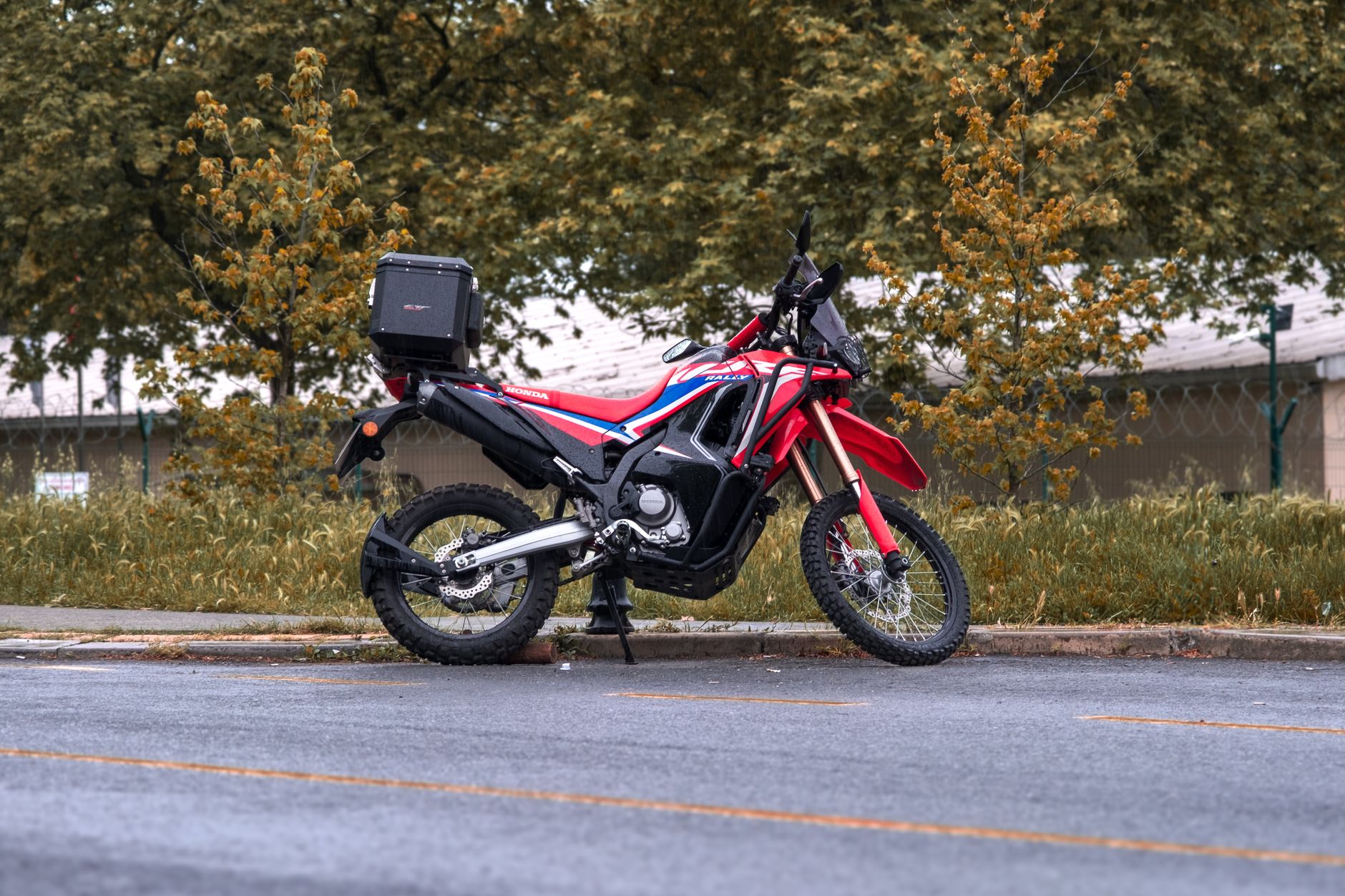
A dual-sport motorcycle already handles pavement, gravel, and rough tracks, but long-distance travel exposes its limits. Limited storage, wind fatigue, weak protection, and poor access to power can turn a promising trip into an uncomfortable one. The right upgrades should improve endurance without adding clutter or excessive weight. These eight accessories address the areas that matter most on extended rides.
1. Luggage That Keeps Weight Low
Soft panniers, a tail bag, and a compact tank bag give you practical storage without making the motorcycle difficult to handle. Keep heavy items low and close to the center of the bike, while lighter clothing and sleeping gear can sit higher. Before buying, check mounting clearance, exhaust heat, waterproofing, and how easily the bags can be removed at camp. Riders comparing fitment, maintenance parts, and supporting equipment can explore our range of Kawasaki KLR 650 accessories before choosing a complete luggage setup.
2. A Skid Plate for Rough Ground
A skid plate protects the lower engine area from rocks, ruts, and severe impacts. Factory covers often handle ordinary road debris, but remote routes place more demand on the frame and engine cases. Choose a plate that leaves access to routine service points, including drain plugs and oil filters.
Mounting hardware deserves equal attention. Tighten fasteners correctly, inspect them after the first rough ride, and check for trapped mud that could hide damage. A protected underside lets you cross uneven ground with fewer concerns about a single strike ending the trip.
3. Handguards for Weather and Impact
Full-wrap handguards protect your hands from branches, stones, and cold wind while reducing the chance that a fall bends a control lever. They also shield the grips during low-speed drops, which are common when a loaded motorcycle becomes harder to balance.
Check clearance around the brake and clutch levers before tightening the mounts. The controls must move freely at full steering lock. Handguards with sturdy brackets suit mixed-terrain travel better than lightweight covers that protect only against wind.
4. A Taller Windscreen
A taller windscreen reduces direct airflow to the chest and helps limit fatigue during long highway sections. It should redirect air smoothly rather than send turbulent air toward the helmet. Your height, riding position, and helmet shape all affect the result, so adjustable mounting points make setup easier.
Do not treat maximum height as the goal. A screen that blocks too much airflow can create buffeting or trap heat at low speed. Test the position at several speeds, then confirm that the screen does not restrict steering or obscure the road.
5. A Seat Built for Full-Day Riding
The stock seat may work for short trips but become uncomfortable after several hours. A touring seat or quality seat pad spreads pressure across a larger area and supports a more consistent riding position. That reduces the need to shift constantly, especially when the motorcycle carries luggage.
Seat height also affects control. A thicker replacement can make stops less confident for shorter riders, while a narrow profile can preserve ground reach without sacrificing support. Pair the seat with regular breaks, because no padding replaces movement during a full day in the saddle.
6. Auxiliary Lighting and Power
Auxiliary lights improve visibility on dark roads, wooded tracks, and poorly marked approaches. Aim them carefully so they illuminate the route without blinding oncoming traffic. Use weather-resistant connectors and secure wiring away from steering movement, hot surfaces, and sharp edges.
A USB power outlet keeps a phone, navigation unit, or communication device charged. Before adding electrical equipment, check the motorcycle’s available capacity and protect each circuit with the correct fuse. A simple installation is easier to inspect when troubleshooting becomes necessary far from home.
7. Suspension Protection and Control
A loaded motorcycle changes its suspension behavior. Added luggage can increase sag, reduce ground clearance, and make the bike feel less settled through corners or rough sections. Correct spring adjustment and damping settings help restore control without requiring an extreme setup.
Start with the weight you will actually carry, including water and riding gear. Adjust one setting at a time and record the result. A suspension upgrade makes more sense after the load is known, because the right choice depends on rider weight, luggage, terrain, and travel pace.
8. A Tool Kit for Roadside Work
A compact tool kit can turn a minor problem into a short roadside stop instead of a recovery call. Pack tools that fit the motorcycle’s fasteners, tire levers, a pressure gauge, spare fuses, cable ties, and repair materials for common punctures. Add a small flashlight and work gloves for repairs after dark.
Conclusion
Build the motorcycle around the trip you plan to ride, then test every accessory with the full travel load before leaving. Start with protection, storage, comfort, and electrical reliability, and make each change one at a time so its effect is clear. A balanced setup keeps the KLR 650 manageable on pavement, capable on rough ground, and easier to maintain throughout a long journey.