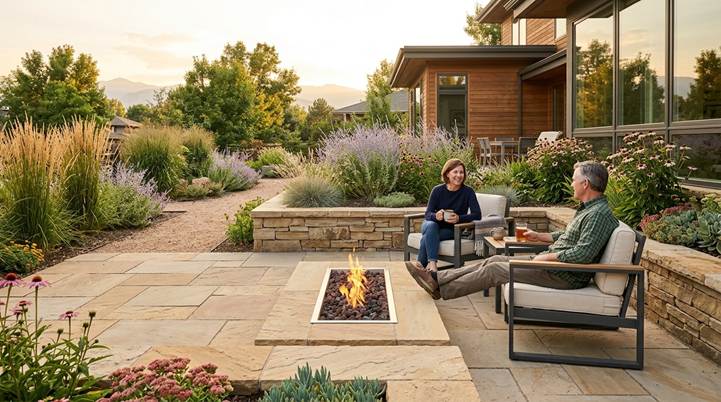
By a landscape design industry contributor. For years, the goal for a Denver yard was simple: keep the grass green. This often meant a constant fight against the dry climate, high-altitude sun, and unpredictable weather. But a big change is happening. Now, the focus is on designing yards that thrive in Colorado’s unique environment, not forcing them to work. It’s about creating useful, year-round outdoor living spaces, not just pretty lawns.
This change affects how you should plan a project. It’s no longer just about sod and sprinklers. It means understanding hardscape materials that can survive freezing and thawing, planning to save water, and adding features like fire pits or outdoor kitchens. Looking at all the landscape services denver now means thinking like an architect, not just a gardener. The value goes beyond your property line; according to the City and County of Denver, the city’s trees help clean the air, cool neighborhoods, and support wildlife. Your yard is part of that system.
Quick answer: Modern landscaping in Denver focuses on smart water use, strong hardscaping, and creating useful “outdoor rooms” you can enjoy all year. The trend is moving away from high-maintenance grass and toward spaces that blend with the natural Colorado landscape. They use native plants and materials built to last in our climate.
What’s inside
· How Should You Budget for a Major Landscape Project?
· What Questions Should You Ask a Designer or Contractor?
· What Are the Key Elements of Water-Wise Design?
· Frequently Asked Questions About Denver Landscaping
How Should You Budget for a Major Landscape Project?
Your budget is mostly set by the materials you choose, how complex the design is, and the work needed to prepare the site, not just the size of your yard. A simple sod and sprinkler job has a completely different cost than a multi-level patio with an outdoor kitchen and custom lights. Understanding the main costs is the first step to making a realistic financial plan.
Labor is a big part of any project’s cost. The national median wage for general landscaping workers was $17.96 per hour in May 2023, according to the U.S. Bureau of Labor Statistics, but workers with special skills cost more. The skills needed for stonework, building pergolas, or licensed irrigation work require more training and higher pay. A project’s cost reflects the mix of general labor and these skilled workers.
The materials you pick also have a big effect on the final price. In Denver, materials must survive intense sun and the cycle of freezing and thawing. This cycle can crack or push up hardscapes that aren’t chosen or installed correctly. Natural stone, for example, is often more expensive than concrete pavers but offers unique strength and a different look. The same is true for plants. Investing in large trees and shrubs gives you an immediate result but costs more than smaller, younger plants that will take years to grow. This is an investment in time as much as it is in materials.
Finally, think about the long-term value. A good landscape design is an investment, not just a cost. It can improve your home’s curb appeal and create useful living space. It also helps the wider community. The City and County of Denver reports that tree canopy covers only about 15% of the city, so every well-planted yard adds real benefits for the environment. Your property is a piece of that larger puzzle.
❝ A common guideline for a major landscape project is to budget 10% to 15% of your home’s current value. This is only a starting point, but it helps you think of the project as a significant home improvement investment, not just a simple maintenance task.
What Questions Should You Ask a Designer or Contractor?
You should ask questions that show how a company works and what they know, not just what they charge. A detailed proposal is a starting point. But understanding how a contractor handles soil prep, getting materials, and managing the project is what makes the difference between a landscape that lasts and one that fails in a few years. The goal is to make sure they understand Colorado’s unique challenges.
Start with the design and planning stage. Ask if they provide 3D models or detailed plans. This helps make sure you and the designer have the same vision before any work begins. Ask about their process for choosing plants. Do they focus on native and water-wise plants that are right for Denver’s high, dry climate? A contractor who can explain why a certain plant will do well in your yard’s specific conditions (like a south-facing slope) shows they have real knowledge, more than one who just gives you a generic plant list.
Next, focus on building methods, especially for hardscaping. The freeze-thaw cycle in Colorado is hard on patios, walkways, and retaining walls. Ask about the depth and type of base material they use for pavers. A common problem is a weak base, which leads to shifting and cracking. According to the Concrete Masonry & Hardscapes Association (CMHA), a proper base is key for a long-lasting patio. A good contractor should be able to explain their methods and how they follow the best practices for cold climates.
Finally, ask about the project plan and communication. Who is the main project manager? How often will you get updates? How will you handle changes or unexpected problems, like hitting a utility line or finding poor soil? Understanding the proposal type is also key.
| Proposal Type | What It Includes | Best For | Potential Pitfall |
| Line-Item Bid | A detailed list of labor, materials, and amounts. | Comparing specific costs or if you expect changes. | Can be confusing and hide high profit margins. |
| Lump-Sum Proposal | A single, fixed price for all the work described. | Projects with a clear, final design and plan. | Less detail can hide what is not included. |
| Design-Build Agreement | One contract for both the design and construction work. | Large, complex projects that need to run smoothly. | You have to commit to one company from the start. |
A contractor who is open and honest will welcome these questions and give clear, confident answers. Vague answers or not wanting to explain their methods should be a big red flag.
What Are the Key Elements of Water-Wise Design?
It’s a system that combines soil preparation, smart watering, and careful plant choice, not just a list of drought-friendly plants. A truly water-wise landscape, often called a xeriscape, is designed from the ground up to do well in Denver’s dry climate by making the most of every drop of water. The goal is to create a strong yard that is beautiful without needing constant water.
The process starts with the soil. Much of the Denver area has heavy clay soil, which is thick and drains slowly. Without improving it, water can pool on top and dry up in the sun or run off into the street. Adding compost and other organic matter to the soil is key. This doesn’t just add nutrients; it changes the soil itself, creating pockets of air. This lets water soak down to the roots, where it can be stored for plants to use.
Next is the watering method. Traditional pop-up sprinklers can be wasteful in our dry climate. A lot of the water can be lost to wind and the sun before it even hits the ground. Drip irrigation systems are a much better option. These systems use a network of tubes to deliver water slowly and directly to the base of each plant. This saves water and helps plants grow deep roots, which makes them stronger during dry times.
❝ Many people hear “xeriscape” and picture a yard of just rocks and cacti. But a good water-wise garden can be green, colorful, and full of life. The method is about smart plant choices and grouping, not giving up on beauty. It’s about working with the Colorado climate, not against it.
Finally, choosing and placing plants is key. This means more than just picking native plants. It means grouping plants with similar water needs together. This is called hydrozoning. You might create a low-water zone with yarrow and penstemon, a medium-water zone for certain shrubs, and a small, high-water zone for a vegetable garden. This stops you from overwatering one plant just to keep its neighbor alive. Covering the soil with a thick layer of mulch, like shredded bark or wood chips, is the final step. Mulch protects the soil, stops weeds, and greatly reduces water loss, keeping the soil cool and moist.
Frequently Asked Questions About Denver Landscaping
Is a rate of $100 per hour too high for landscape work? That rate usually covers a full crew with insurance and equipment, not just one person’s pay. The cost typically includes two or more workers, special equipment, fuel, insurance, and project management costs. When you look at a price, it’s important to understand what is included in the hourly rate. A lower price might not cover the same level of professional service.
How can I evaluate the quality of a landscape company? Look beyond their main photo gallery and ask to see examples of projects that are like yours. A quality contractor should be able to show you their hardscaping, planting, and irrigation work that has grown in for several seasons. You can also ask about their process for getting the right permits from the city. This shows they know the local rules.
What are some landscaping ideas that work well for Denver’s climate? Think about creating sheltered areas. A well-placed row of evergreen trees or a decorative wall can block the wind, making a patio more comfortable on more days of the year. Also, think about materials for the intense sun. Dark pavers can get very hot in the high-altitude sun, so lighter-colored stone or concrete can be a better choice for areas where you’ll walk barefoot.
How long does a typical landscape design and build project take? The timeline depends on the project, but you can generally break it down into stages. The first design and review process might take 2 to 6 weeks. If you need permits, that can add several more weeks, depending on how busy the city is. The construction work itself can range from a few weeks for a simple patio to several months for a big project with an outdoor kitchen, a lot of hardscaping, and new plants.
What kind of maintenance does a new xeriscape require? While a xeriscape is designed to be low-water and low-maintenance, it is not “no-maintenance,” especially for the first two years. New plants need regular watering with a drip system to grow strong roots. You will also need to manage weeds and add fresh mulch every year or two to hold in soil moisture and stop new weeds from growing.
Thinking Beyond the Blueprint
A good landscape project is more than just hiring someone to do a job. It’s an investment in a living system that becomes part of your home. The most important decisions are not about picking a certain paver color or type of plant. They are about the foundation: the soil prep, the plan for watering, and the building methods that will last in Denver’s tough climate.
The biggest choice you will have to make is between the initial cost and how long the work will last. A bid that seems cheap may cut corners on hidden things, like the base for a patio or improvements to the soil. These are the things that prevent expensive problems later on. Your job as the homeowner is to look past the design on the surface. Ask the technical questions that show if a contractor is committed to building a landscape that lasts.
In the end, the best way is to see the process as a partnership. The goal is to find a partner who can turn your ideas into a useful, strong outdoor space that works with the local environment, not against it. By focusing on the ‘how’ and ‘why’ of the design, you can make a choice that gives you value for years, not just one season.
About the author
This article is contributed by the team at C H Landscaping, a Denver-based landscape design and build company. Founded by Trevor and Lisa Webb in 2005, the family-owned company focuses on creating strong and useful outdoor living spaces made for Colorado’s unique climate. Their work combines hardscape construction, such as patios and outdoor kitchens, with smart planting and watering plans for homeowners across the Denver metro area, Boulder, and Castle Rock.