Streetlights, headlights and early sunrises all find their way into your bedroom. Even a thin strip of light can make it harder to fall asleep, and it's easy to forget to close the shades every night. That's where motorized blackout shades help, blocking light and lowering on a schedule.
Blackout shades for bedrooms are the most effective fix, but the details matter. Zebra shades, for example, come in several opacity levels, and a bedroom calls for a 100% blackout version. This guide covers why darkness matters, how shade types compare, which styles suit a bedroom, and how to close light gaps.
Why a Dark Bedroom Matters for Sleep
Light is the most important external cue your body clock uses to decide when to feel alert and when to rest. In darkness, the pineal gland releases melatonin, a hormone that promotes sleep. Light blocks melatonin production, and if that happens before bed or during sleep, it can disrupt your sleep-wake cycle.
In a 2022 Northwestern study in PNAS, adults who slept one night in moderate room light (100 lux) instead of dim light (3 lux) had higher heart rates during sleep and greater insulin resistance the next morning. Senior author Dr. Phyllis Zee recommends blackout shades when outdoor light can't be controlled.
Blackout vs. Room Darkening vs. Light Filtering Shades
Shade labels can be confusing, and choosing the wrong category is an easy way to end up with a bedroom that never gets fully dark. The key spec is opacity, meaning how much light the fabric itself lets through. Here is how the three main categories compare.
- Blackout shades use opaque fabric designed to stop light from passing through the material itself. They are the go-to choice for bedrooms, nurseries, home theaters and anyone who sleeps during the day.
- Room darkening shades block most incoming light but still let some glow through the fabric. They suit guest rooms or anyone who doesn't mind a little morning light, but they won't create a truly dark room.
- Light filtering shades soften and diffuse daylight while adding daytime privacy. They keep a room bright and reduce glare, which suits living rooms, kitchens and home offices rather than spaces meant for sleep.
Choosing the Best Blackout Shades for Your Bedroom
Once you've settled on blackout fabric, the next decision is the shade style, and the right one depends on how you use the room. If it's only for sleeping, a roller shade's maximum darkness should come first.
Zebra shades are the better fit if you also read, work or relax in your bedroom during the day. They let you shift between soft daylight and full privacy with a quick adjustment. Below is a closer look at both styles.
Blackout Roller Shades: Maximum Darkness
Roller shades use a single, flat panel of fabric that rolls up into a compact tube. With blackout material, that continuous panel blocks light across the full width of the window, making roller shades the most reliable option for deep darkness.
Zebra Shades: Flexible Light Control
Zebra shades use a continuous loop of fabric with alternating sheer and solid bands. A small adjustment either lines up the sheer bands to let soft daylight through or covers them with solid bands for privacy.
How dark a zebra shade gets when closed depends on its fabric. For a bedroom, choose a 100% blackout version, since lower-opacity zebra shades are designed to let some daylight through even when fully closed.
If total darkness is your top priority, a blackout roller shade remains the simpler option. If you want daytime flexibility with strong nighttime coverage, a 100% blackout zebra shade is a practical middle ground.
Fabric and Color
With true blackout fabric, light blocking comes from the material's opaque construction, so you don't need a dark color to get a dark room. You can choose a color based on your decor instead.
Soft neutrals keep a bedroom feeling airy during the day, while deeper tones create a cozier, more dramatic look. If easy cleaning matters, vinyl blackout fabric is moisture-resistant and simple to wipe down. Linen-style textures add a warmer, softer feel.
How to Eliminate Light Gaps Around Your Shades
Even the best blackout fabric can't stop light that slips around its edges. Roller shades are made slightly narrower than the window opening so they can move smoothly, which can leave thin gaps along the sides. Here's how to minimize them:
- Choose the right mount. An inside mount sits within the frame for a clean look but needs enough depth and leaves small side gaps. An outside mount overlaps the wall, which reduces light leaks, especially on shallow or uneven frames.
- Overlap generously. With an outside mount, extend the shade a few inches past each side of the frame and mount it above the top so light can't spill around the edges.
- Add side tracks. Light-blocking side tracks close the edge gaps and are one of the most effective upgrades for near-total darkness.
- Cover the top. Light can also escape above the roller. A cassette, valance or fascia over the roll helps block that gap.
- Measure carefully. Measure width and height in three places each and follow the manufacturer's guide. Accurate numbers are the difference between a snug fit and a halo of light.
Why Motorized Blackout Shades Make a Dark Room Easier
A dark bedroom only works if the shades are actually closed when you need them. Motorization turns that from a nightly chore into an automatic routine, and it brings several practical benefits for sleep spaces.
- Schedules: Program shades to lower at bedtime and rise at your wake-up time. Morning light is a key signal for your body clock, so pairing dark nights with bright mornings helps keep your sleep schedule consistent.
- Hard-to-reach windows: Shades on tall, wide or awkwardly placed windows can be hard to adjust by hand, especially behind a headboard. A remote or app lets you raise and lower them without leaving bed.
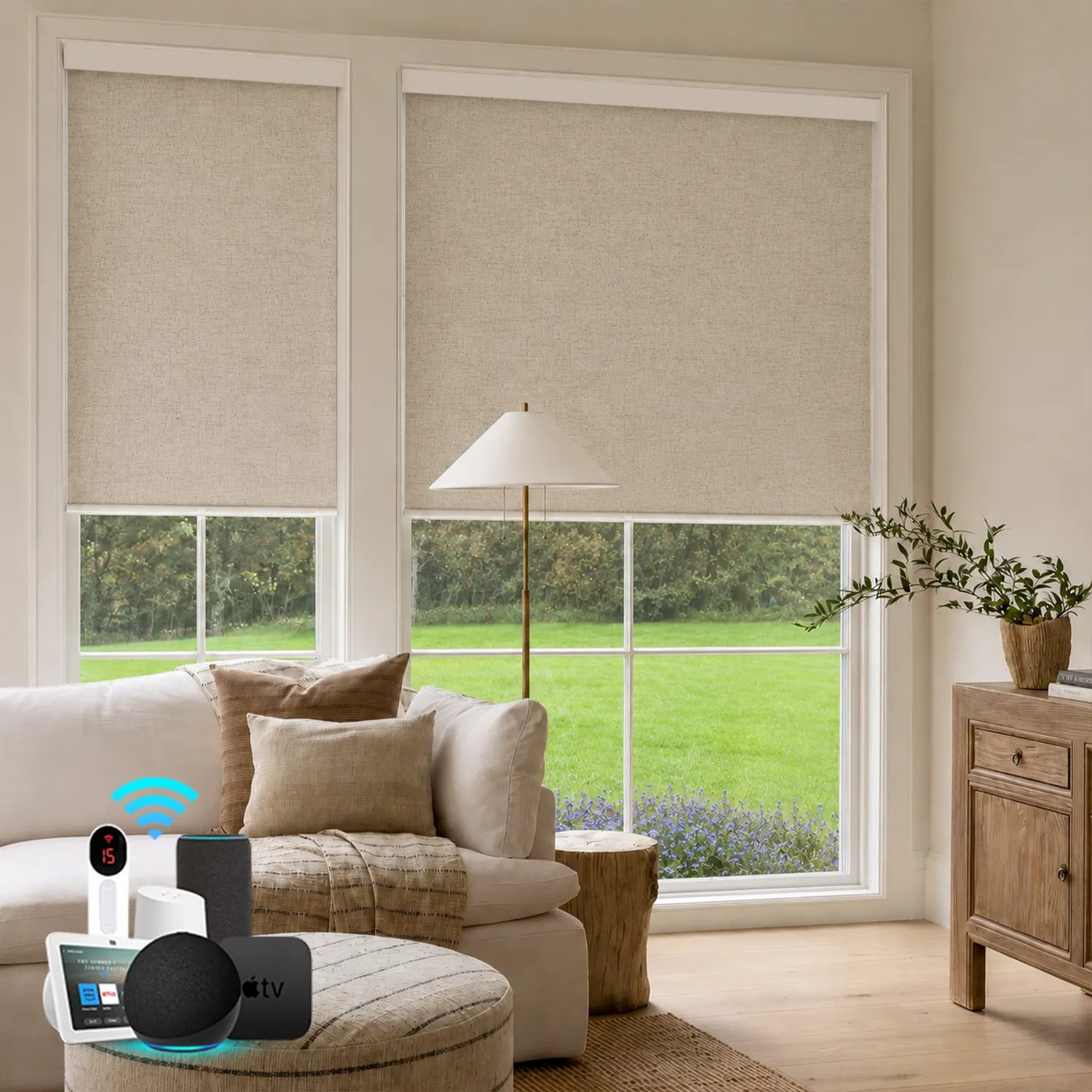
- Smart home control: Many motorized shades work with platforms such as Amazon Alexa, Google Home and Samsung SmartThings, so one voice command or automation can close every shade in the room at once.
- Cordless safety: Motorized shades have no dangling operating cords, which removes a known strangulation hazard for young children. That makes them a smart choice for nurseries and kids' rooms, where safe operation matters as much as darkness.
Power options matter too. Rechargeable battery motors are the easiest to add to an existing home because they need no new wiring, while hardwired motors suit new construction and larger smart home setups.
A Final Checklist for a Truly Dark Bedroom
Windows are usually the biggest source of light, but not the only one. Once your blackout shades are in place, run through this checklist to catch smaller leaks that can still brighten the room:
- Blackout fabric, not room darkening, on every bedroom window
- Shades sized and mounted to minimize side and top gaps
- Side tracks added if light still shows along the edges
- The gap under the door blocked with a draft stopper or towel
- Glowing clocks, chargers and electronics covered, dimmed or removed
- Dim amber or red night lights placed low to the floor, or motion-activated lights
A truly dark room comes from the right fabric, the right fit and a few small habits. Start with blackout shades for bedrooms sized for your windows, close the gaps around them, and let automation keep the routine consistent, so your bedroom stays dark until you choose to let the morning in.