Fourteen thousand dollars. That is the rough middle of the range most homeowners hear when they ask a contractor about gutting a kitchen.
You wanted drawers that close quietly and doors that match the floor. The quote came back with the words “load-bearing” and “permit timeline” in it, and suddenly your Saturday project turned into a two-month evacuation of your own house.
Here is the thing nobody says out loud: most kitchens do not need to be demolished. They need new faces. You already have square boxes bolted to the wall, and those boxes are usually fine. What aged is the door, the finish, and the hardware. If that sounds like your situation, you have a decision to make, and it is mostly about knowing which parts of your kitchen are actually broken.
This guide walks you through that decision honestly, including the cases where I would tell you to remodel instead.
What cabinet refacing actually involves
Refacing keeps your existing cabinet boxes and replaces everything you see. The process goes like this: a crew removes your old doors and drawer fronts, applies a new veneer or laminate skin over the box faces, installs new doors and fronts, and finishes with new hardware.
That is it. No dumpster in the driveway. No sink sitting in your bathtub for three weeks. You can usually still make coffee in the kitchen while the work is happening, which matters more than people admit.
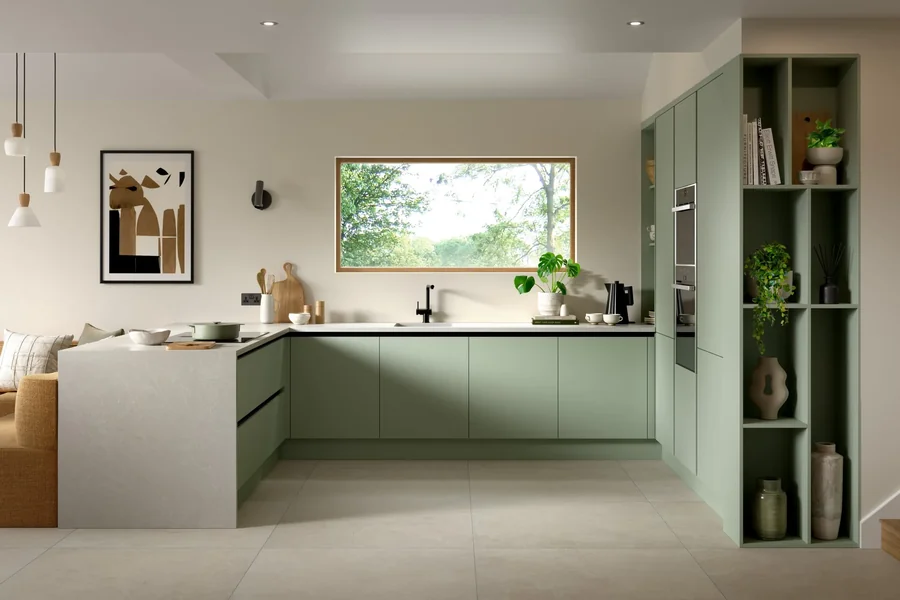
The results look like new cabinetry because, functionally, you are getting new cabinetry on the surfaces that face you every day. The part you never see stays exactly as it was.
Where the real savings come from
People assume the savings come from cheaper materials. That is only part of it. The bigger number is labor and demolition you never pay for.
According to the Department of Energy, kitchens and appliances account for a meaningful share of household energy use, which is one reason homeowners prioritize kitchen updates, yet the improvement itself rarely requires touching the structure at all. A full remodel pays for tear-out crews, disposal, drywall repair, new plumbing rough-in, and the electrical inspection that comes with opening walls. Refacing skips nearly all of it.
A quick gut check on materials too: old cabinets often carry particleboard and finishes that are hard to recycle, and the Environmental Protection Agency tracks construction and demolition debris as one of the largest waste streams in the country. Keeping boxes in place means fewer trips to the landfill, and it is one of the few home projects where the cheaper option is also the less wasteful one.
I would pick refacing over a full remodel nine times out of ten, and I say that as someone who likes a good renovation. The tenth time is real, though, and worth being honest about.
Is refacing right for your kitchen?
Here is a short test I run through with anyone weighing this decision. I call it the Refacing Fit Test, and it has four questions.
- Are your boxes solid? Open a door and press on the inside panel. If it flexes, feels soft, or crumbles near the hinges, refacing has nothing dependable to attach to.
- Does the layout work? If you are happy with where the sink, range, and fridge sit, refacing is a clean win. If you want to move plumbing or tear down a wall, that is a remodel by definition.
- Is there water damage? Look under the sink and around the dishwasher. Stained, swollen, or musty wood means the box is compromised, and covering it up just hides a problem you will meet again later.
- Are you chasing the look, or the layout? Style is a refacing job. Space is a construction job. Knowing which one you actually want saves you thousands.
If you answered no to the first three and yes to the fourth, stop shopping for contractors and start shopping for finishes.
The options you will actually choose between
Refacing gives you a narrower menu than a full build, and that is a feature, not a limitation. Narrow menus get decided.
- Thermofoil: smooth, affordable, handles moisture well, best for clean modern lines.
- Rigid thermofoil and laminate: durable surfaces with a wide color range, good middle ground on price.
- Wood veneer: real oak, maple, or cherry grain, refinishable later, the warmest look of the group.
- Hardware: the single cheapest upgrade with the biggest visual return. Soft-close hinges and new pulls change how the whole room feels in an afternoon.
One warning from experience: pick your door style before your finish color. Homeowners who do it the other way spend weeks second-guessing because color options shift the moment the profile changes.
What the timeline really looks like
Most refacing projects run a few days rather than a few weeks, which is the part that sells people. Here is the honest schedule.
| Phase | Typical Duration | What You Deal With
|
|---|---|---|
| Measurement and ordering | 1 to 2 weeks of waiting | Nothing. Your kitchen works normally. |
| Door and drawer removal | Half a day | Empty your cabinets first, or at least the front half. |
| Veneer and box work | 1 to 2 days | Some dust, mild odor from adhesives. |
| New doors and hardware | 1 day | The good part. This is when it clicks. |
The waiting period is longer than the work itself, and that surprises everyone. Order early if you have a holiday or a listing date in mind.
The Powder Room Rule
Before you commit, walk into your bathroom and look at the vanity. Really look at it.
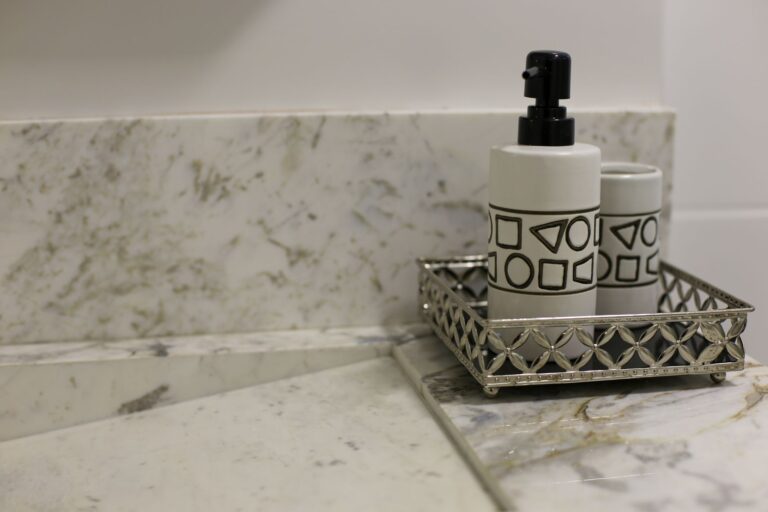
I call this the Powder Room Rule because it catches a mistake I see constantly. If your kitchen cabinets are dated, your bathroom vanity is probably from the same decade, and guests see the bathroom just as often as the kitchen. Homeowners who reface the kitchen and ignore the vanity spend the next two years feeling like the house is half finished, and the kitchen ends up carrying all the design weight in a room that never asked for it.
Compare finishes between the two rooms before you order. You do not need them identical, but they should agree on warmth, hardware finish, and formality. Coordinating up front costs nothing. Retroactively matching a discontinued door profile costs plenty.
For a sense of how style cycles move through real homes, HGTV tracks kitchen and bath trends continuously, and the pattern is consistent: surfaces and hardware shift far more often than layouts do. That is the whole argument for refacing in a single sentence.
When a full remodel is the honest answer
I promised to tell you when refacing is wrong, so here it is. Refacing is the wrong call if your boxes are failing, if you have active water damage, or if the layout fights you every single day.
There is also a hidden scenario worth naming. If you plan to relocate the range for a better work triangle, refacing will not get you there. You will pay for refacing, then pay again for the remodel, and you will have spent the refacing money for nothing.
On the other side of the ledger, if your cabinets are structurally sound and you simply hate the doors, refacing is a cost-effective alternative to a full kitchen remodel that preserves the kitchen you already know how to use. That matters. A new layout means relearning where everything lives, and most people underestimate how much they like their current muscle memory.
Your next move
Get a quote for both. Ask any contractor to walk through your kitchen and tell you plainly which boxes they would keep and which they would not. A good one will point at a specific cabinet and explain the call. A bad one will talk in generalities about “value.”
Then compare the two numbers side by side, count how many days each option takes away from your normal life, and decide which trade you actually want to make. The answer is usually clearer than you expect once the two figures sit next to each other on one page.
Which cabinet in your kitchen would you keep? That is the only question you have to answer before you know which project you are really shopping for