A meal outside can start in broad daylight and end with someone using a phone light to find the serving spoon. The table looked ready at six. By nine, the bright lamp beside the door is catching everyone's eye, while the drinks are disappearing into a dark corner.
Lighting is easy to overlook when there are chairs to arrange and food to prepare. Yet a little planning makes the evening easier to host. Think through the whole visit, from the first arrival to the last trip back to the kitchen, before deciding where another light would help.
Start where guests arrive
Walk from the gate or driveway to the place where people will sit. Look for the turn beside a planter, the step at the door, and the narrow stretch where guests pass one another. Check those places after dark, using the lights you already have.
A bright entrance does not tell you much about the rest of the route. Stand farther away and look at the walking surface. Can you follow it comfortably, or does the doorway look bright while the approach remains difficult to see?
When comparing outdoor lighting, give each proposed fitting a specific job. Lighting the entrance, helping people follow a path, and adding a glow beside a sofa may call for different arrangements. That is a more useful starting point than choosing several matching lights and finding places for them later.
Include the entrance and the approach when planning light for an evening at home.
Pull the chairs out before placing anything
An empty patio offers plenty of space. Add a full table, occupied chairs, and someone carrying a tray, and the usable area becomes much smaller. Set out the furniture as it will be used before settling on positions for portable lights.
Leave room behind the chairs and along the route indoors. A floor lantern that looks attractive beside the table may become awkward once a guest pushes their chair back. Check nearby doors as well, including the one you will use repeatedly while serving.
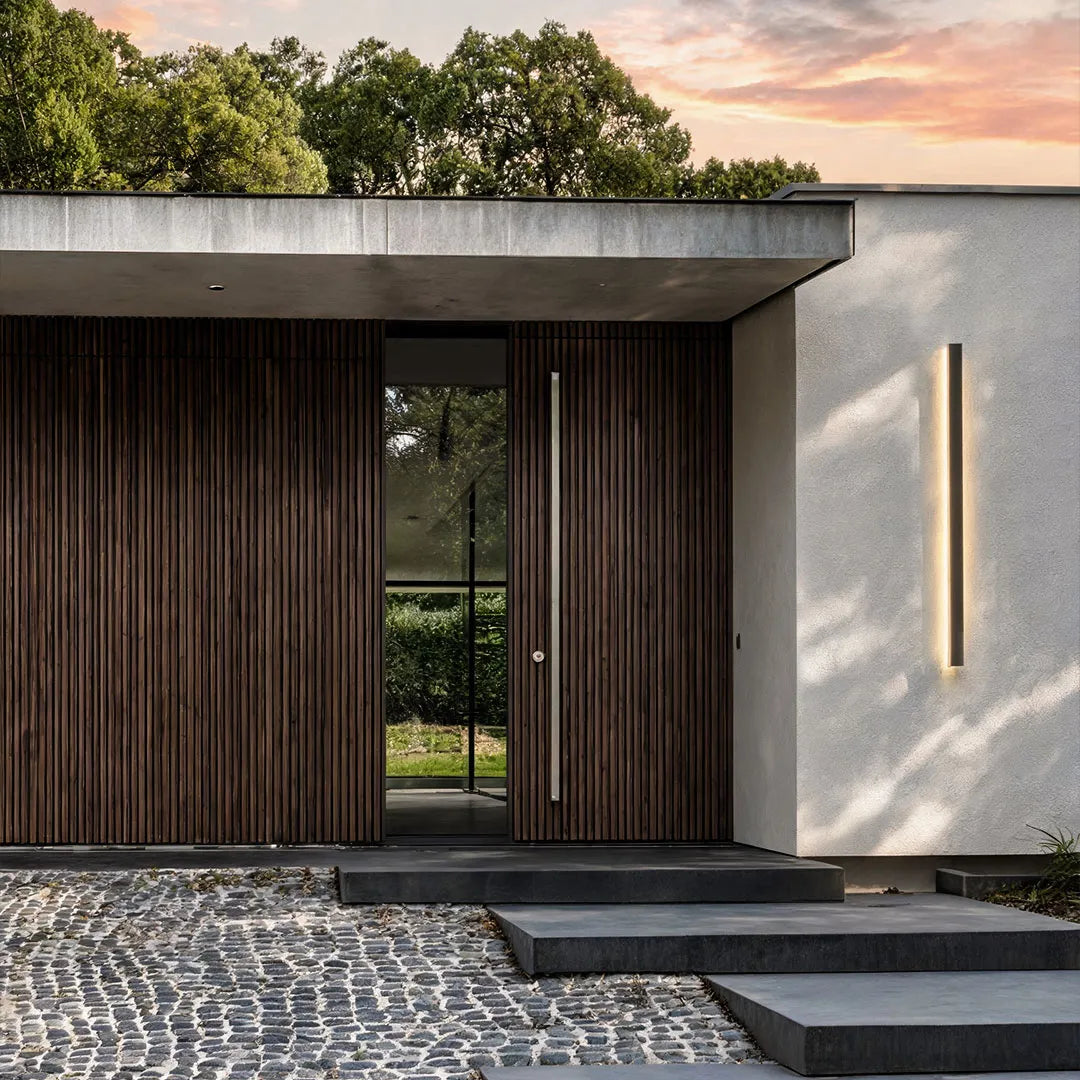
Keep cables out of the walking area, and check the mounting and power requirements of any fixed fitting with the installer. Include its projection from the wall in the layout. A product photograph taken straight on can make that detail easy to miss.
Give the serving spot its own attention
The dining table often gets all the attention, but the sideboard or serving table does a lot of work. It holds the water, spare glasses, food labels, and the utensils everyone asks for halfway through the meal.
Try the arrangement with those objects in place. A decorative lantern may create a pleasant pattern across the surface while leaving something small difficult to find. Keep enough clear space for plates and dishes, and decide whether the serving area needs more useful illumination.
Carry a tray from the kitchen as a practical check. Both hands are occupied, so notice where you need a switch and whether the route is clear. It is easier to change the arrangement before guests arrive than while balancing a bowl of salad.
Judge the table lighting from a seat
Sit at each side of the table and look across it. Check whether people can see one another comfortably and whether a bright source sits directly in anyone's line of sight. Standing beside the table gives you a different view.
Keep large lanterns and tall decorations out of the space people need for conversation. If a fitting has adjustable output or direction, use only the settings and adjustments its instructions allow. More brightness is not automatically more comfortable.
Do not judge the result from a photograph alone. Exposure can make an evening scene appear brighter or darker than it feels in person. Check the actual arrangement with the surrounding house lights in the state you expect to use during dinner.
Keep one part of the lighting flexible
After the meal, people may move to a sofa or a quieter corner. A portable outdoor lantern can follow that change, provided it has a stable place to sit and stays clear of the route between the seats.
Choose a model intended for the conditions where you will use it. A covered terrace and an exposed deck are different locations. Check the manufacturer's outdoor suitability, care instructions, and permitted placement for the spot you have in mind.
Prepare portable lights before the evening starts. For rechargeable models, follow the charging instructions. For solar models, check where the panel needs to be during the day. Confirm the expected operating time for the setting you plan to use, and keep the fixed lighting available for the jobs a decorative lantern does not cover.
A portable lantern can accompany the move from dinner to a seat on the terrace.
Remember the last half-hour
Clearing the table needs light too. Keep the serving area and the route to the kitchen usable while plates, glasses, and leftover food go back indoors. Guests collecting coats and walking to the gate may still need the entrance lighting.
If timers or separate controls are supported, plan their operation around those last tasks. Decorative lights can go off when the seating area is empty; other lights may still have a job to do.
Test the setup on an ordinary evening before a larger gathering. Move a chair, carry the dishes, and sit down with a drink. Those small routines will tell you where the lighting needs attention before the table is full.